
Groin hernias are among the most common surgical conditions seen in infants and young children. They occur when a portion of the intestine or abdominal tissue pushes through a weak area in the lower abdominal wall, creating a noticeable bulge in the groin region. Understanding why groin hernias develop can help parents seek timely care and avoid complications. If you notice any unusual swelling in your child’s groin, consulting a specialist for Pediatric Groin Hernia Treatment in HSR Layout can ensure accurate diagnosis and effective treatment.
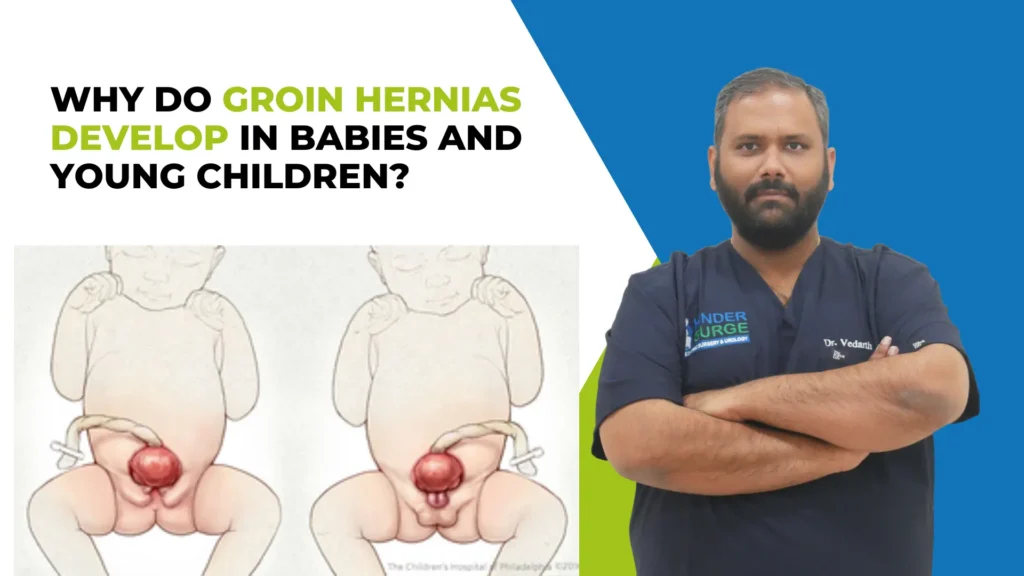
Understanding Groin Hernias in Children
A groin hernia, also known as an inguinal hernia, usually develops before birth. During fetal growth, a small passage called the inguinal canal should close naturally. When this passage remains open, abdominal contents can move through it and cause a hernia.
Groin hernias are more commonly seen in boys but can also affect girls. The condition may be present at birth or become noticeable during infancy and early childhood.
Why Do Groin Hernias Develop in Babies and Young Children?
1. Incomplete Closure Before Birth
The most common reason for a pediatric groin hernia is the incomplete closure of the inguinal canal during fetal development.
2. Premature Birth
Premature babies are at higher risk because the closure process may not be fully completed before birth.
3. Increased Pressure Inside the Abdomen
Crying, coughing, or straining can make a hernia more noticeable, although these activities do not directly cause the condition.
4. Family History
Children with a family history of hernias may have a greater chance of developing the condition.
5. Congenital Weakness in the Abdominal Wall
Some children are born with naturally weaker tissues in the abdominal wall, increasing the likelihood of hernia formation.
Signs Parents Should Watch For
Parents should seek medical attention if they notice:
- A bulge or swelling in the groin area
- Swelling that appears while crying or coughing
- A lump that disappears when the child relaxes
- Pain or discomfort in the groin
- Irritability in infants
- Swelling extending into the scrotum in boys
Early diagnosis allows prompt Pediatric Groin Hernia Treatment in HSR Layout and helps prevent complications.
When Should You Consult a Pediatric Surgeon?
You should consult a pediatric surgeon if:
- The swelling persists or becomes larger
- The child experiences pain or discomfort
- The bulge becomes hard or tender
- Vomiting accompanies the swelling
- The hernia does not disappear when the child is resting
Timely evaluation helps prevent serious complications such as incarcerated or strangulated hernias.
Diagnosis and Treatment Approach
A pediatric surgeon can usually diagnose a groin hernia through a physical examination. In some cases, ultrasound imaging may be recommended.
Treatment typically involves surgical repair because pediatric groin hernias do not close on their own. Modern surgical techniques offer:
- Safe and effective repair
- Minimally invasive laparoscopic procedures
- Faster recovery times
- Minimal discomfort after surgery
FAQ
1. Why do babies get groin hernias?
Groin hernias usually develop when the inguinal canal does not close completely before birth.
2. Are groin hernias common in premature babies?
Yes. Premature babies have a higher risk of developing groin hernias.
3. Can a groin hernia disappear without treatment?
No. Pediatric groin hernias generally require surgical repair.
4. Is surgery necessary for pediatric groin hernias?
Yes. Surgery is the standard treatment to prevent complications.
5. Where can I get Pediatric Groin Hernia Treatment in HSR Layout?
Dr. Vedarth Dash provides expert Pediatric Groin Hernia Treatment in HSR Layout, offering advanced diagnosis and child-friendly surgical care.
Conclusion
Groin hernias in babies and young children are usually caused by incomplete closure of the inguinal canal before birth. Early recognition and timely treatment are essential to prevent complications and ensure a smooth recovery. If you notice a groin swelling in your child, consult Dr. Vedarth Dash for expert Pediatric Groin Hernia Treatment in HSR Layout and comprehensive pediatric surgical care.